
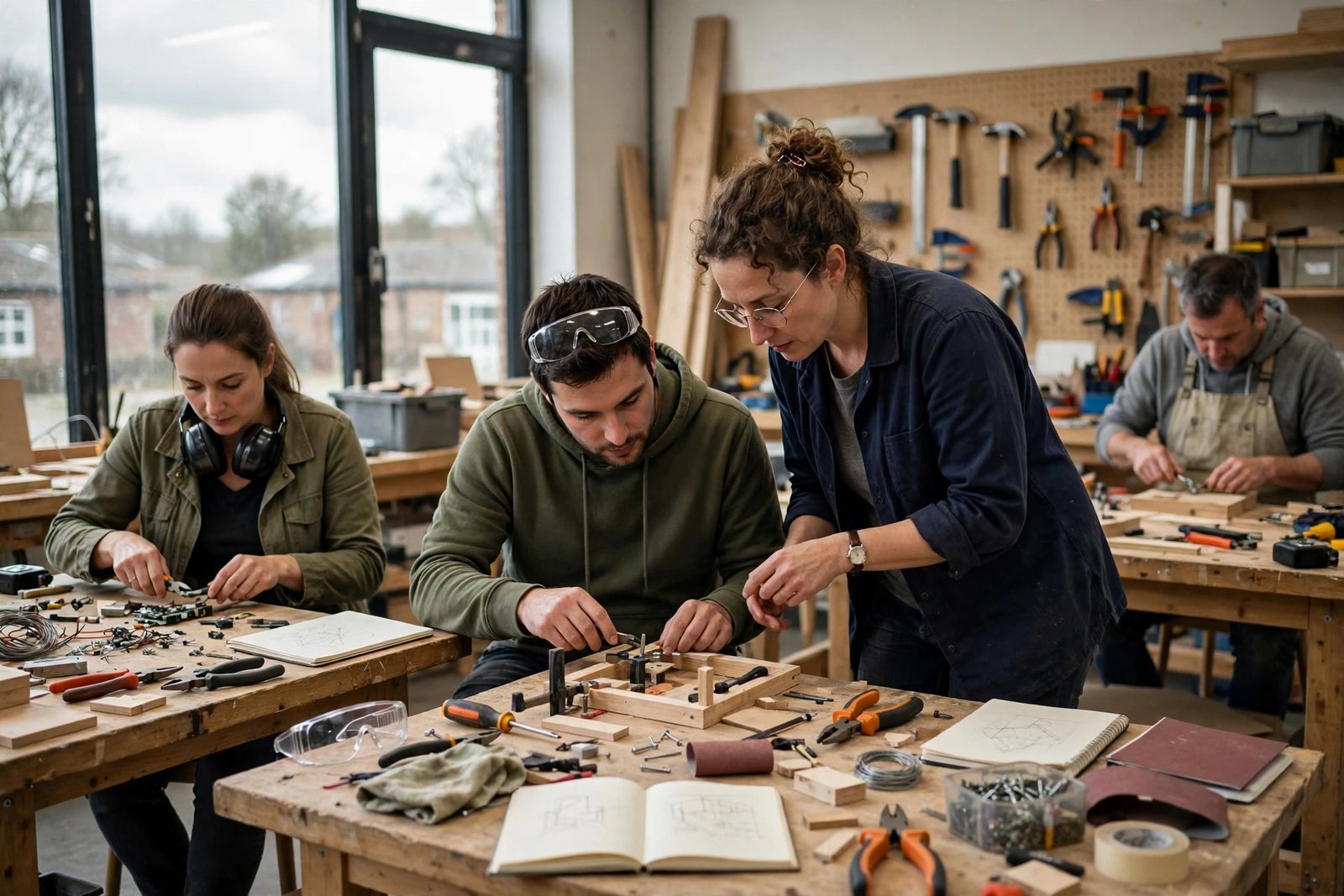
A Level 1 course is an entry-level qualification in England, Wales, and Northern Ireland, pitched below GCSE level. It is designed for people who are starting out in a subject, returning to learning after a break, or building up the basic skills and confidence they need before moving on to a Level 2 course. If you have ever felt that formal education moved too fast for you, or you left school without the grades you wanted, a Level 1 course is often the most sensible place to start again.
We have seen plenty of people write off further education because they think they have missed their chance. That is rarely true — the UK system is built in steps, and Level 1 is the first proper step on the ladder. This guide explains what a Level 1 course is, who it suits, what you can study, where to take one, and what comes next.
How the UK qualification levels work
Qualifications in England, Wales, and Northern Ireland are organised into levels, from Entry Level up to Level 8, giving employers and colleges a shared way to judge what a qualification covers. You do not need to memorise the whole ladder — but it helps to know where Level 1 sits.
| Level | What it means | Typical examples |
|---|---|---|
| Entry Level | Basic skills, below GCSE | Entry Level awards in English, maths, and life skills |
| Level 1 | Entry-level qualification, below GCSE level | Level 1 diplomas and certificates in vocational subjects |
| Level 2 | Roughly GCSE grades 9 to 4 | GCSEs, Level 2 diplomas, intermediate apprenticeships |
| Level 3 | Roughly A level standard | A levels, Level 3 diplomas, advanced apprenticeships |
| Levels 4 to 5 | Higher education, first year of degree level | Higher National Certificates and Diplomas |
| Levels 6 to 8 | Degree level and above | Bachelor’s, master’s, and doctoral degrees |
A Level 1 course sits just above Entry Level. It is a real qualification, pitched at a gentle pace, with plenty of support and a focus on practical skills rather than exams alone. It is meant to be achievable, and to leave you ready for the next step.
Scotland uses a different system, the Scottish Credit and Qualifications Framework — if you live there, check with your local college for the closest match.
What is a Level 1 course, exactly?
A Level 1 course teaches the basics of a subject, along with the study skills you need to keep going. Courses are usually practical and hands-on — you will spend more time doing things, in a workshop, a kitchen, a salon, or on a computer, than sitting through long lectures.
Most Level 1 courses cover a mix of:
- Vocational skills — the practical basics of the subject, like food preparation, hairdressing, or using software.
- English and maths — often built in, especially if you did not get the grades you wanted at school.
- Study and work skills — timekeeping, working in a team, following instructions, and presenting your work.
- Work experience — some courses include a short placement, giving you a taste of the job and something real for your CV.
Assessment is usually coursework, practical tasks, and short tests rather than one big exam — which suits learners who do not do their best work under exam pressure.
Who are Level 1 courses for?
Level 1 courses are for anyone who needs a solid starting point — a wider group than most people expect. That includes school leavers without the GCSE grades they needed, adults returning after years away from a classroom, career changers trying a new field, people building English or maths skills alongside a vocational subject, and learners who benefit from a slower pace, smaller groups, and more one-to-one support.
There is no upper age limit — we have seen people start Level 1 courses in their forties, fifties, and beyond, and do very well. Colleges are used to mixed-age groups, and adult learners bring life experience younger students do not have yet.
You do not need formal qualifications to start most Level 1 courses — colleges usually ask for an informal chat or a short assessment to check the level is right for you.
Typical Level 1 subjects
Level 1 courses cover a wide range of vocational areas, and the exact subjects vary from college to college. Common ones include health and social care, construction and trades, hospitality and catering, hair and beauty, business and administration, IT and digital skills, motor vehicle, animal care and horticulture, art and design, sport and fitness, and English and maths.
If you are not sure which subject to pick, think about what you enjoy and what jobs are available near you. A college adviser can help you match a subject to the work you actually want to do.
Where can you study a Level 1 course?
Most Level 1 courses are run by further education colleges — the main place to look. Your local college will list its Level 1 courses on its website, and most hold open days where you can talk to tutors and look around.
Other places to study include adult education centres run by local councils, which often offer part-time and evening courses; training providers, which deliver vocational courses sometimes linked to a specific employer; community learning projects, which offer smaller local courses; and online providers — though hands-on subjects like construction or hairdressing still need practical sessions in person.
When choosing a provider, check the course leads to a recognised qualification. In England, you can check whether a qualification is regulated through Ofqual’s register — the official list of regulated qualifications. That matters, because it is what employers and colleges look at when you apply for the next step.
What does a Level 1 course lead to?
A Level 1 course is a stepping stone, not a dead end. The most common next step is a Level 2 course in the same subject, roughly GCSE standard, which opens up more job options. From Level 2, you can move on to Level 3, an apprenticeship, or straight into work.
A typical path runs from Level 1 to a Level 2 course in the same subject, then to Level 3 or an apprenticeship, and from there into work or higher education.
Some people go straight into entry-level work after Level 1. Either way, the course has done its job if it leaves you more confident and better qualified than when you started.
How to choose the right Level 1 course
Choosing a course is easier if you work through a few honest questions first:
- What do you enjoy doing? You will stick with a course far longer if you actually like the subject.
- What jobs are available near you? Look at local job listings and see which sectors are hiring. A course that leads to real local work is worth more than one with no jobs attached.
- Full-time or part-time? Be realistic about your time, work, and family commitments. A course you can actually finish beats an ambitious one you have to drop.
- What support is on offer? Ask about English and maths support, study skills help, and any additional support for learners who need it. Good support often makes the difference.
- What happens next? Ask the college what students usually do after the course. If most go on to Level 2 or into work, that is a good sign.
If you are still unsure, book an advice session with your local college, or go to an open day and meet the tutors. Advice sessions are free, with no obligation, and advisers are used to helping people who are not sure where to start.
Costs and funding
Costs vary by course, provider, and your age and circumstances, so we will not quote figures here — they go out of date fast. What is worth knowing is that many Level 1 learners do not pay full fees. In England, many 16 to 18 year olds study for free, and adults may qualify for free or reduced-fee courses depending on income, employment status, and qualifications already held.
The best move is to ask the college or provider directly about fees and funding before you apply. They can tell you exactly what applies to you. You can also check GOV.UK for current information on further education funding and financial help for adult learners.
FAQ
Is a Level 1 course the same as a GCSE?
No. A Level 1 course is below GCSE level — GCSEs are Level 2 qualifications. Level 1 is the step that prepares you for Level 2, and many Level 1 courses include English and maths work to help you get there.
Can I do a Level 1 course as an adult?
Yes. There is no upper age limit, and colleges welcome adult learners. Many Level 1 courses are designed with adult returners in mind, and part-time and evening options are common.
Do I need GCSEs to start a Level 1 course?
Usually not. Most Level 1 courses do not ask for formal qualifications. Colleges may invite you for a chat or a short assessment to check the level is right for you, but they will not turn you away for lacking GCSEs.
Can I get a job after a Level 1 course?
You can, and some people do — especially in sectors with entry-level roles and on-the-job training. But for most people, the stronger move is to use Level 1 as a launchpad into a Level 2 course, which opens up more jobs and better pay.
How long does a Level 1 course take?
It varies. A full-time course at a college typically runs for one academic year, while part-time and evening options spread the same content over longer. Some short awards take a matter of weeks; a full diploma takes longer.