
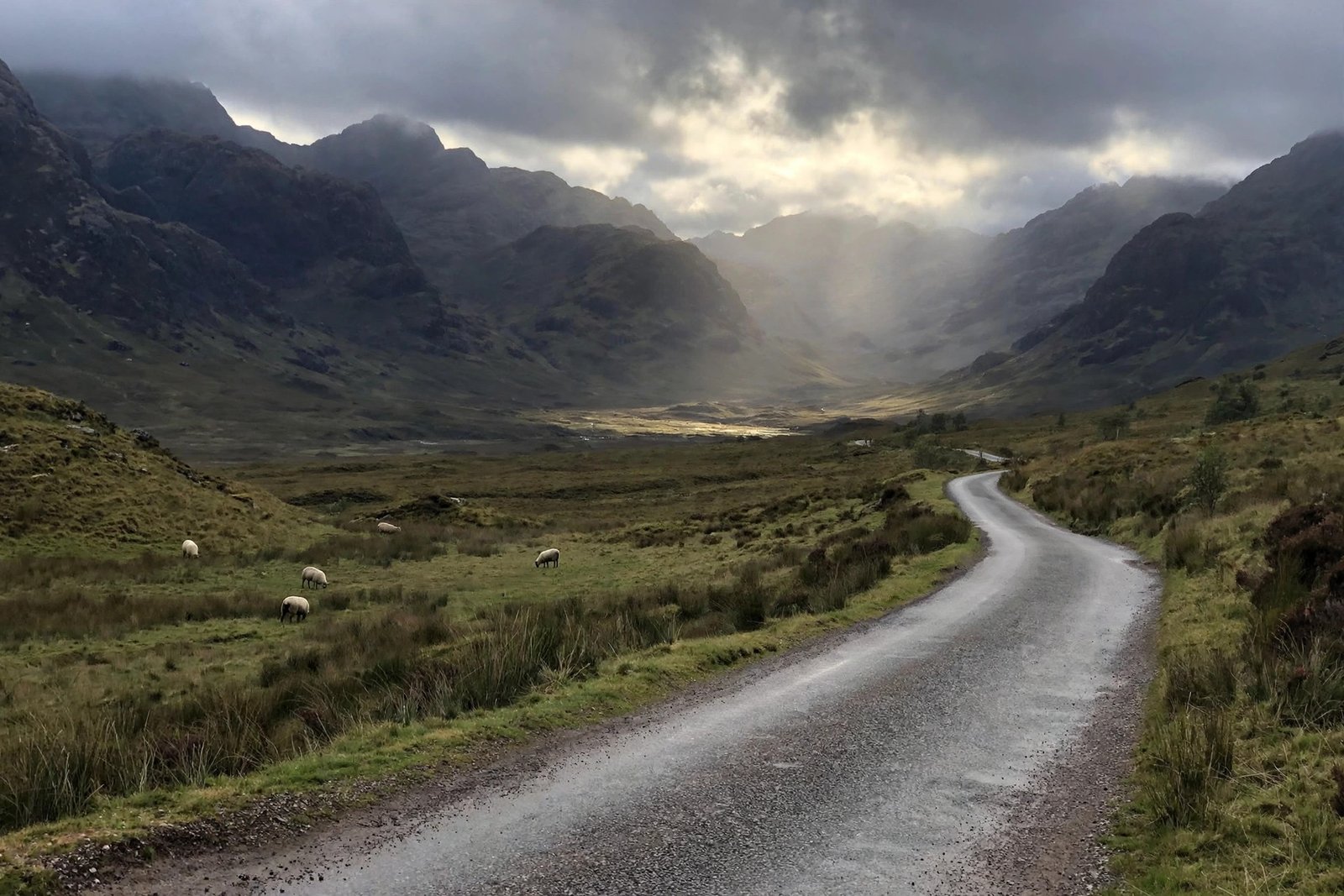
If you only get one trip to Scotland, start with Edinburgh, the Isle of Skye, and the Highlands: a historic capital you can walk everywhere in, wild island scenery, and big open glens. Add Glasgow for city life and food, Loch Ness for a classic day out, and Stirling or St Andrews if you like history.
We have planned trips around Scotland for friends more times than we can count, and the question is always the same: where should we actually go? The trick is picking places that suit the kind of trip you want, instead of trying to tick off everything in one go.
Edinburgh: the obvious first stop, for good reason
Edinburgh is where most people start, and honestly, it earns it. The Old Town runs along the Royal Mile from the castle to Holyrood Palace, and you can walk it in an afternoon — though you will want longer, because every close seems to hide a pub, a cafe, or a view worth stopping for.
The castle sits on its rock above the city and you can see it from almost anywhere. Arthur’s Seat, the hill at the edge of Holyrood Park, is a proper walk rather than a gentle stroll, but the view from the top across the whole city and out to the Firth of Forth is one of the best free views in the UK. Wear decent shoes. The wind up there does not mess about.
Edinburgh suits almost everyone: couples on a city break, families, history lovers, food lovers. It is busiest in August during festival season, so book ahead; late spring and early autumn are quieter, with softer light and thinner crowds.
Glasgow: bigger, warmer, and underrated
Glasgow gets overlooked because Edinburgh takes the spotlight, and that is a shame. It is Scotland’s biggest city and feels different — less postcard, more lived-in. The people are famously friendly, the music scene is one of the best in the UK, and the food scene has quietly become excellent.
The West End, around the university and Kelvingrove Museum, is the prettiest part to wander — Kelvingrove is free and worth a couple of hours.
Glasgow suits city-break travellers who like eating out, live music, and museums, and it makes a good base for day trips to Loch Lomond. It also tends to be a bit cheaper to stay in than Edinburgh, which helps if you are watching the budget.
Isle of Skye: the scenery everyone talks about
Skye is the place people picture when they think of Scotland. The Old Man of Storr, the Quiraing, the Fairy Pools — the names sound made up, but the landscapes are real, and even better in person than in photos. The light changes every few minutes, so the same hillside can look completely different by the time you reach the next viewpoint.
Skye is popular and the roads are mostly single-track, so driving takes longer than the map suggests. Book accommodation well ahead, especially in summer, and be ready for weather that changes four times in an afternoon.
Skye suits walkers, photographers, and anyone who wants to slow down for a couple of days. It is less suited to a rushed one-day dash — you will spend most of it in the car. Give it at least two nights if you can.
The Highlands: big skies and empty roads
The Highlands are not one place but a whole region, and the best way to enjoy them is to drive through slowly. Glencoe is the valley everyone remembers: steep, dark mountains on both sides of the road, and a sense of scale photos never quite capture. Glen Coe village makes a good stop for a walk or a coffee.
Further north, the road to Inverness runs past lochs and moorland that go on for miles. Inverness is a small, friendly city and a handy base for the area. If narrow rural roads put you off driving, guided tours run from Edinburgh or Inverness year-round.
| Place | Best for | When it shines |
|---|---|---|
| Edinburgh | First-timers, history, festivals | Spring and autumn for fewer crowds |
| Glasgow | Food, music, museums | Year-round |
| Isle of Skye | Scenery, walking, photography | Late spring to early autumn |
| Highlands | Road trips, wild landscapes | Spring through autumn |
| Loch Ness | A classic day out, families | Summer for boat trips |
| Stirling | Castles and Scottish history | Spring and summer |
| St Andrews | Golf, beaches, university town feel | Summer |
| Orkney | Ancient sites, wildlife, quiet islands | Summer for long daylight |
Loch Ness: worth it, with the right expectations
Loch Ness is famous for one thing, and you probably know what it is. The loch itself is long, deep, and genuinely beautiful, ringed by hills, with Urquhart Castle in ruins on its shore. A boat trip is a relaxing way to see it, and the castle is worth the stop.
Go for the scenery and the castle, and treat any monster-spotting as a bonus. It works well as a day trip from Inverness.
Stirling: Scotland’s history in one small city
Stirling packs a lot of history into a small place. Stirling Castle sits on a rock above the town and was once one of Scotland’s most important castles — kings and queens were crowned here. The Wallace Monument, just outside the city, honours William Wallace and gives you a sweeping view over the countryside.
Stirling suits history lovers and anyone travelling between Edinburgh and the Highlands — it sits right on the route, and a half-day stop often turns into a full day.
St Andrews: more than golf
St Andrews is known around the world for golf — the Old Course is one of the most famous courses anywhere. But even if you have never picked up a club, the town is worth a visit: a pretty university town on the Fife coast, with sandy beaches, ruined cathedral walls, and a relaxed, walkable centre.
It suits a quiet day out from Edinburgh, a beach walk, or a golf pilgrimage — summer is best for the beaches.
Orkney: Scotland’s quieter islands
Orkney is a group of islands off the north coast, and it feels like a different world. The main draw is history: Skara Brae, a Stone Age village older than the pyramids, and the standing stones of Stenness and the Ring of Brodgar, which have stood in the same fields for thousands of years. The islands are also good for wildlife — seals, seabirds, and sometimes orcas offshore.
Orkney suits travellers who have seen the mainland highlights and want something quieter. Summer days are very long, and you reach the islands by ferry or a short flight.
How to plan your first Scotland trip
A week is a good length for a first trip: two or three nights in Edinburgh, two nights on Skye or in the Highlands, and a night or two in Glasgow or Inverness. Save Orkney for a second trip.
A few practical tips we give every friend who asks:
- Book ahead in summer. Accommodation on Skye and in the Highlands sells out fast.
- Pack for four seasons. A waterproof jacket is not optional — layers beat one heavy coat.
- Drive on the left, take your time. Rural roads are narrow and winding, so build in extra time.
- Check train and bus options. Trains link Edinburgh, Glasgow, Inverness and Stirling well, and tour companies cover Skye and the Highlands.
- Eat local. Try haggis at least once, look for fresh seafood on the west coast, and save room for a proper Scottish breakfast.
For official visitor information, VisitScotland is the national tourism body’s website and a reliable place to check before you travel. For train times and tickets, National Rail is the place to look.
FAQ
What is the best time of year to visit Scotland?
Late spring (May and June) and early autumn (September) are the sweet spots — longer days, milder weather, and fewer crowds than the summer peak. Summer is warmest and best for the islands; winter is quiet, though daylight is short.
How many days do I need for Scotland?
A week covers Edinburgh, Glasgow, and a taste of the Highlands or Skye; ten days lets you do Skye properly and add Loch Ness. For a long weekend, base yourself in Edinburgh and add one day trip, like Stirling or St Andrews.
Is Scotland expensive to visit?
It can be, especially Edinburgh in August, but staying in Glasgow, travelling outside peak season, and using free attractions like museums, beaches, and hill walks all keep costs down. Many of Scotland’s best sights cost nothing at all.
Do I need a car in Scotland?
Not for the cities — Edinburgh and Glasgow are easy on foot and by bus or train. For Skye and the Highlands, a car gives you far more freedom, though guided tours from Edinburgh or Inverness cover the main sights.
What should I pack for Scotland?
Layers, a waterproof jacket, and comfortable walking shoes matter most. Even in summer, evenings can be cool and rain can arrive without warning. For hill walks, add proper boots and an offline route, since phone signal drops out in the glens.