
How to Start a Cleaning Business in the UK: A Step-by-Step Guide
If you’re asking how to start a cleaning business in the UK, here’s the short version: register as a sole trader with HMRC, get public liability insurance, sort out your equipment and supplies, set your prices, and start finding clients locally. You can get going with a small setup and grow from there — many cleaning businesses start as one person with a car, a vacuum and a reliable routine.
It’s one of the more straightforward businesses to start. There’s no shop to rent, no stock to hold, and demand is steady — homes, offices, landlords and holiday lets all need cleaning, week after week. The hard part isn’t starting. It’s building a reputation that keeps clients coming back and recommending you.
Is a Cleaning Business Right for You?
Be honest with yourself before you spend money. Cleaning work is physical, and it’s detail work. You’ll be on your feet for hours, and clients will notice the corners you skip.
It suits people who like working on their own and managing their own day, who are organised and reliable, and who take pride in a visible result. If you hate cleaning your own home, this probably isn’t the business for you.
Choose What Kind of Cleaning You’ll Offer
“Cleaning business” covers a lot of ground. Picking a focus early makes your marketing much easier, because you can speak directly to the people who need that exact service.
Common options include:
- Domestic cleaning — regular weekly or fortnightly cleans in private homes. Steady income, loyal clients.
- End-of-tenancy cleaning — deep cleans for landlords and letting agents when tenants move out. Higher effort per job, often higher pay per job.
- Office and commercial cleaning — cleaning offices, shops or small business premises, usually out of hours. Contracts can be regular and reliable.
- Holiday let and Airbnb cleaning — changeover cleans between guests, including laundry. Fast turnaround matters here.
- Specialist cleaning — oven cleaning, carpet cleaning, or window cleaning. Needs extra equipment or training, but less competition.
You don’t have to pick just one forever. Most people start with domestic cleaning because it’s the easiest to get into, then add services as they grow.
Register as a Sole Trader With HMRC
In the UK, most people starting a cleaning business begin as a sole trader. That means you run the business as yourself — there’s no separate company to set up.
You need to register as self-employed with HMRC. You can do this online through the GOV.UK website, and you’ll need to do it by the relevant deadline after you start trading — check GOV.UK for the current deadline so you don’t miss it.
As a sole trader, you’ll keep records of your income and expenses, file a Self Assessment tax return each year, and pay Income Tax and National Insurance on your profits.
Keep every receipt from the start — cleaning products, equipment, travel, phone use for work. Good records save you time at tax return time, and they make sure you claim the expenses you’re entitled to.
Get Insurance Before Your First Job
Insurance isn’t the exciting part, but it’s the part that protects you when something goes wrong. At minimum, look into:
- Public liability insurance — covers you if you accidentally damage a client’s property or someone is injured because of your work. Many clients, especially offices and letting agents, will ask to see this before hiring you.
- Employer’s liability insurance — legally required in the UK if you employ anyone, even part-time.
- Insurance for your equipment — worth considering if you invest in expensive machines.
A knocked-over vase or a scratched floor can happen to anyone, even a careful cleaner. Insurance turns a bad day into a claim instead of a bill you pay out of pocket.
Sort Out Equipment and Supplies
You don’t need a van full of gear to start. A solid basic kit covers most domestic cleaning:
- A reliable vacuum cleaner
- Mop and bucket, or a flat mop system
- Microfibre cloths in different colours — one colour for bathrooms, one for kitchens, so you never mix them up
- All-purpose cleaner, bathroom cleaner, kitchen degreaser, glass cleaner, floor cleaner
- Gloves, sponges, scrubbing brushes
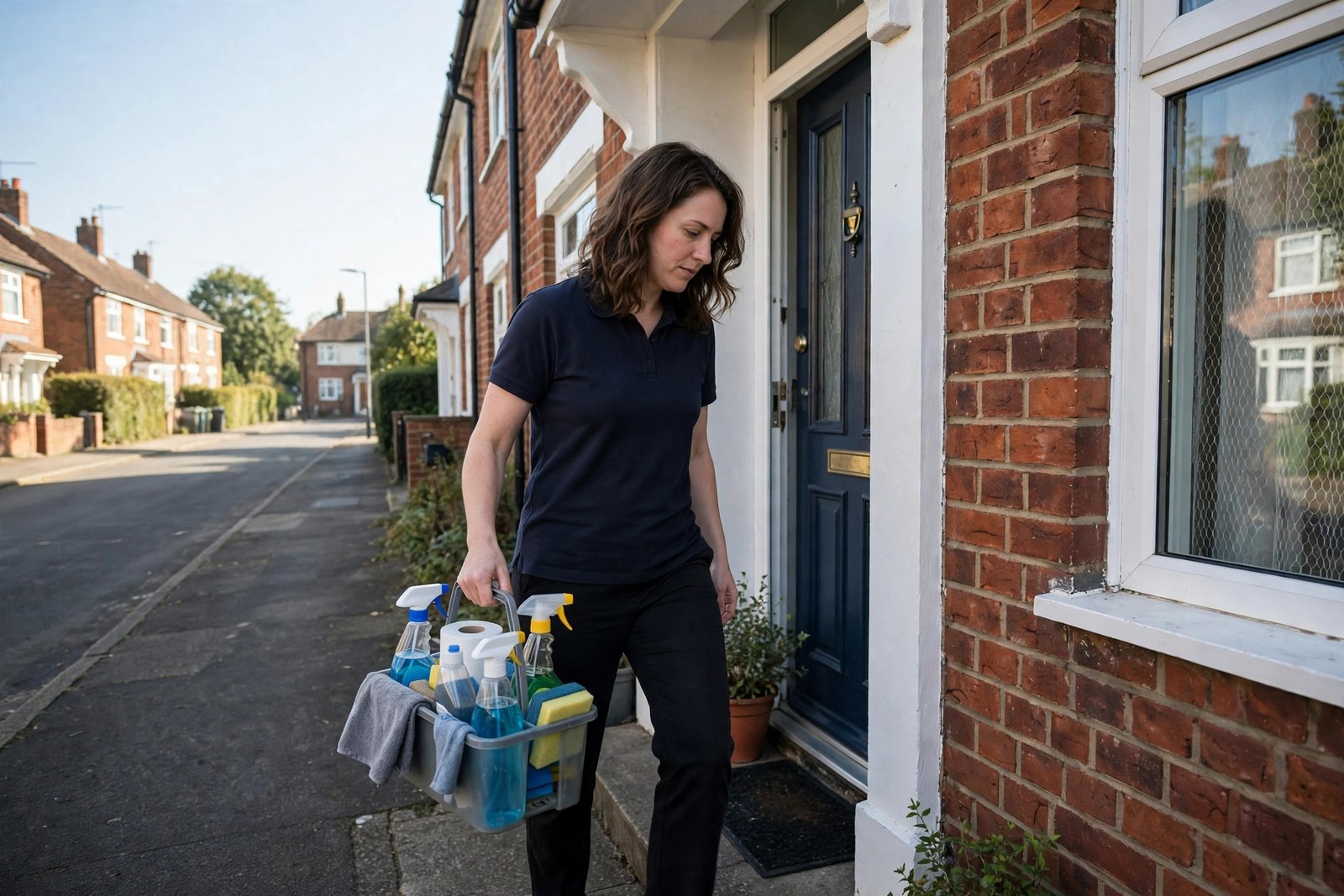
- A caddy or bag to carry it all
Some cleaners bring their own products; others use the client’s. Using your own is more professional and means you always have what you need, but it costs more upfront. Decide your approach and state it clearly when quoting — clients like knowing what’s included.
Set Your Prices
Pricing is where new cleaners often undersell themselves. Work out your real costs first: products, travel, insurance, tax, and your time. Then set a rate that covers all of that and leaves you a proper wage.
Most domestic cleaners in the UK charge by the hour. End-of-tenancy and one-off deep cleans are usually quoted as a fixed price for the job, because the time involved varies a lot.
A few pricing tips we’ve learned:
- Don’t be the cheapest. The cheapest cleaner gets price-shoppers who leave for someone a pound cheaper. Clients who value reliability will pay a fair rate.
- Quote in writing. Send a clear message or email with what’s included and the price. It avoids arguments later.
- Charge for extras. Oven cleaning, inside windows, laundry, ironing — these take extra time. Price them separately.
Find Your First Clients
Your first clients are the hardest to win. After that, word of mouth does a lot of the work — if you do a good job.
Good places to start:
- Local Facebook groups and community pages — a short, honest post about your new local cleaning service, with what you offer and the areas you cover. Ask happy clients to leave a recommendation there.
- Google Business Profile — free, and it puts you on the map when someone nearby searches for a cleaner. Add photos of your work (with permission) and ask clients for reviews.
- Letting agents and landlords — introduce yourself in person or by email. They need reliable cleaners for end-of-tenancy work and often keep a short list of people they trust.
- Holiday let owners — if you’re near tourist areas, changeover cleaning is in constant demand.
- Your own network — tell everyone you know. Friends, family, neighbours. Most early clients come from someone who knows you.
Whatever channel you use, the same rule applies: reply quickly, turn up when you say you will, and do a thorough job. That’s your marketing.
Keep Clients Happy and Keep Them
Getting a client is one thing. Keeping them is where the money is. A regular weekly client is worth far more than a string of one-off jobs.
What keeps clients:
- Consistency — the same standard every visit, not a great clean one week and a rushed one the next
- Communication — a quick message if you’re running late, or if something needs attention
- Little touches — straightening cushions, folding towels neatly, leaving a room looking cared for
- Honesty — if you break something, say so straight away and sort it out through your insurance
Growing Beyond Solo Work
Once you’re fully booked, you have choices. You can raise prices, take on a helper, or specialise in higher-value work like end-of-tenancy or commercial contracts.
If you take on staff, remember the extra responsibilities: employer’s liability insurance, payroll and holiday pay. Many cleaners grow by taking on one reliable helper first, rather than hiring a team all at once.
Common Mistakes to Avoid
| Mistake | What to do instead |
|---|---|
| Undercharging to win work | Price for your real costs and time, and let quality win clients |
| No insurance | Get public liability cover before your first job |
| Mixing up cloths between rooms | Use a colour-coded system, especially between bathrooms and kitchens |
| No written quotes | Confirm price and what’s included in writing every time |
| Taking on too much too fast | Build a steady round of regular clients before expanding |
FAQ
Do I need qualifications to start a cleaning business in the UK?
No formal qualifications are required. Clients care about reliability, thoroughness and trust. Some specialist work, like carpet cleaning, benefits from training — but for general domestic cleaning, experience and a good reputation matter most.
How do I register as a sole trader?
You register as self-employed with HMRC through GOV.UK, by the deadline after you start trading, and then file a Self Assessment tax return each year. GOV.UK has the current deadlines and a step-by-step guide.
What insurance do I need for a cleaning business?
Public liability insurance is the main one — it covers accidental damage to a client’s property or injury. If you employ staff, employer’s liability insurance is legally required.
How do I find cleaning clients with no experience?
Start local: Facebook community groups, a Google Business Profile, leaflets, and your own network. Offer a first clean at your normal rate and let the quality speak. Ask every happy client for a review — early reviews are gold.
How much can a cleaning business earn?
It varies by area, hours worked, type of cleaning and how well you keep clients. Regular domestic work gives steady income; end-of-tenancy and commercial jobs can pay more per job. Focus first on building a full, reliable round of clients — earnings follow from that.