
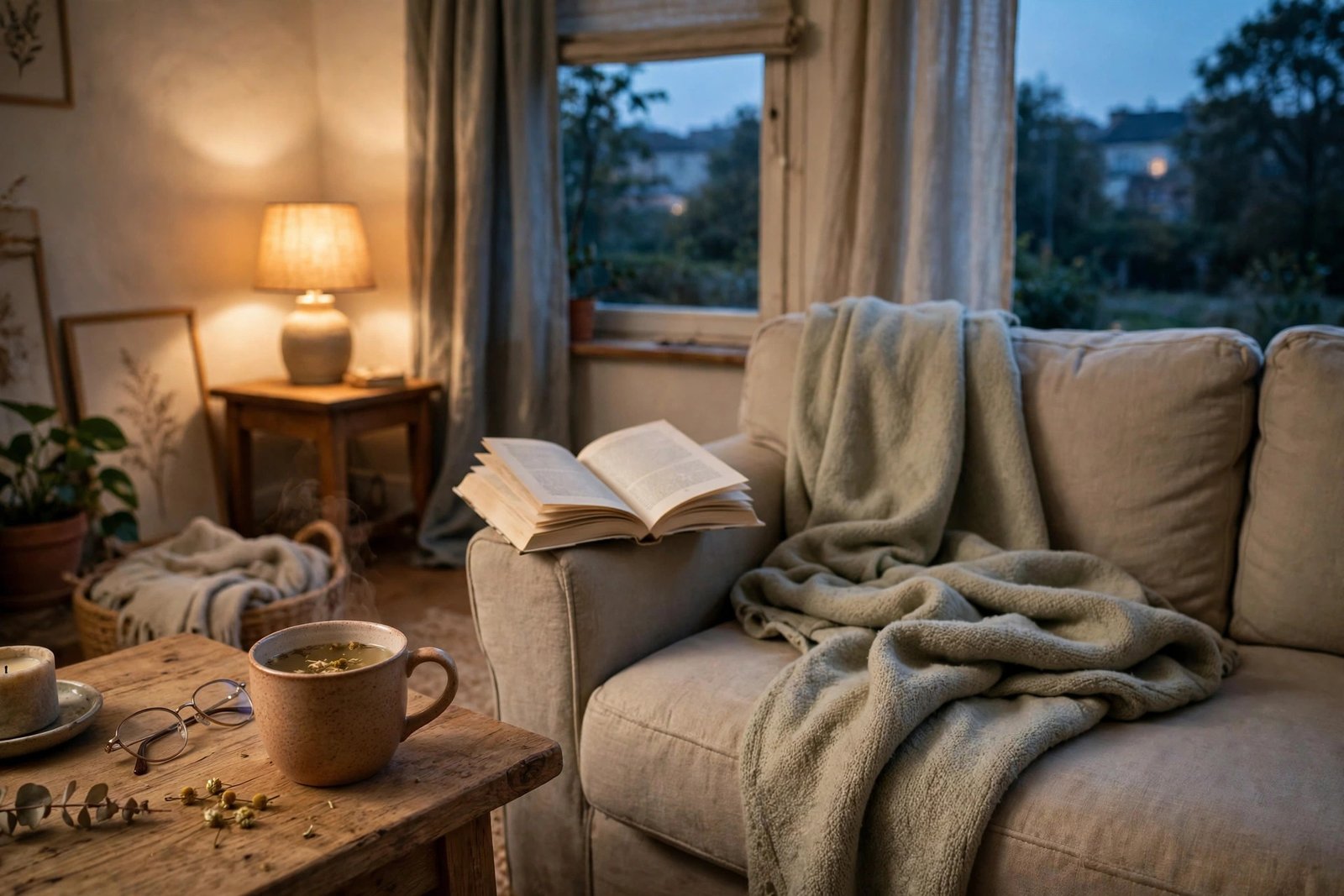
If you want to know how to get a good night’s rest, think about your evening as a whole, not just the moment you get into bed. Rest starts hours earlier: finish the day’s work cleanly, eat a calm dinner, do something that helps you unwind, prepare a few things for tomorrow so your mind can let go, and then give yourself a slow, screen-light hour before sleep. A good night’s rest is something you set up during the evening, not something you chase at midnight.
Our other guide on how to sleep covers the sleep basics — regular wake times, daylight, caffeine and the bedroom itself. This one is different. It is about the wind-down: the evening routine, the way you close the day, and how rest becomes a normal part of your lifestyle rather than a luxury you squeeze in when everything else is done.
We used to treat evenings as leftover time. Work ran late, dinner was rushed, and then we collapsed in front of a screen until we felt tired enough to go to bed. It did not work. We woke up tired, and the next evening went the same way. Changing the evening changed the mornings too.
Rest is a habit, not a reward
A lot of us treat rest as something we earn after finishing everything. The problem is that everything never finishes. There is always one more email, one more job around the house, one more episode.
It helps to flip that around. Rest is part of the day, like eating or working. It gets a slot, and the rest of the evening fits around it. That does not mean long, elaborate rituals. It means deciding, in advance, what your evening looks like — and protecting the last part of it.
Think of it like this: a good evening has three parts. First, you close the day. Then, you do something enjoyable and relaxing. Then, you slow down and get ready for bed. When those three parts happen in the same order most nights, your mind learns the pattern, and rest comes more easily.
Close the day properly
One of the biggest reasons evenings feel restless is unfinished business. Work thoughts, chores, things you meant to do — they all follow you to the sofa and then to bed.
A short close-down routine helps. It only takes ten or fifteen minutes. Check tomorrow’s calendar and write down the two or three things that matter most. Put anything you need for the morning by the door — bag, keys, gym kit, lunch. Tidy the kitchen and lay out breakfast things if that helps your morning. Write a short to-do list for tomorrow, then put it away. Send any last message or email, then close the laptop.
The point is not to finish everything — it is to park it. Once it is written down and the morning is partly ready, your brain can stop holding it all. When a worry pops up later, we can tell ourselves it is on the list for tomorrow. It sounds simple, and it works surprisingly well.
Eat dinner like it matters
Dinner is often the most rushed meal of the day, eaten standing up or in front of a screen. Slowing it down is one of the easiest ways to make an evening feel more restful.
You do not need to cook anything fancy. A simple meal, eaten at the table without a phone in your hand, is enough — sit down properly, taste the food, talk to whoever is there, or enjoy the quiet if you are on your own. Eat at a similar time each evening, keep the meal fairly light, and clear up straight after, so the kitchen is tidy and the evening feels settled.
After dinner, a short walk is a lovely habit. Ten or fifteen minutes outside, even just around the block, helps you digest, clears your head, and marks the shift from the working part of the day to the resting part.
Choose one relaxing thing — and actually do it
Rest does not mean doing nothing. It means doing something that restores you, rather than something that drains you.
The trouble is that we often pick the easiest option — scrolling, or watching whatever is on — and then wonder why we still feel tired. Scrolling is not rest. It keeps your brain busy, comparing, reacting, and taking in new information. You can spend an hour on your phone and feel more wired than when you started.
Instead, pick one thing each evening that genuinely relaxes you — reading, music or a podcast, a bath, gentle stretching, a hands-on hobby, a board game, a chat with family, or sitting in the garden with a cup of tea. It does not need to take hours: half an hour of something you enjoy, without a screen competing for your attention, counts for a lot. The key is choosing it on purpose, rather than drifting into whatever is easiest.
Make your home feel calm in the evening
Your surroundings shape how restful an evening feels. A bright, noisy, cluttered living room keeps you in daytime mode. A few small changes can shift the whole feel of the house after dinner.
Try dimming the lights once the sun goes down, using lamps instead of the main ceiling light, and opening a window for fresh air if the room feels stuffy. You do not need to redecorate or buy anything — a tidy living room, a comfortable chair, a blanket, and a glass of water or a herbal tea on the side table is a restful setup.
If you work from home, this matters even more. Put the laptop away, out of sight, at the end of the workday. When work things are visible, your brain keeps working. When they are packed away, the evening can begin.
Slow down the last hour
The last hour before bed is where rest turns into sleep. Keep it slow, quiet and predictable.
A simple pattern: dim the lights and keep screens off or on night mode; wash, brush your teeth and change into night clothes — small steps that signal the day is ending; then read a few pages, listen to quiet music, or stretch gently, and go to bed when you feel sleepy, not when the clock says you should.
Avoid starting anything new in that last hour. Do not begin a big conversation, a work task, or a tense programme. If your mind is busy, try writing it down. Keep a notepad by the bed. Jot down the thought or the worry, and leave it there. It will still be there in the morning, and you will deal with it better after rest.
Stress and rest: untangling the knot
Stress is one of the main reasons rest feels hard. When you are stressed, your body stays alert. Your mind races. Even when you are tired, you cannot settle.
We are not going to pretend a bath fixes serious stress. But small, regular habits do take the edge off. Talk it out with a partner, a friend or a family member, earlier in the evening rather than at bedtime. Move gently — a walk or some stretching helps the body let go of tension. Try a few slow breaths, write worries down on paper to make them feel more manageable, and limit the news late in the evening, since checking headlines rarely helps and often makes stress worse.
If stress is constant and rest is regularly broken, it is worth talking to your GP. The NHS website has practical guidance on stress and sleep, and your GP can help you work out what support might help. There is no shame in asking.
Prepare tomorrow, then let it go
A big part of a restful evening is knowing tomorrow is handled, at least enough. You do not need to plan the whole day. Just remove the small frictions that make mornings stressful.
| Tonight | Why it helps tomorrow |
|---|---|
| Clothes laid out | No morning decisions when you are half awake |
| Bag packed, keys by the door | No last-minute hunt |
| Lunch or breakfast ready | One less thing to rush |
| Tomorrow’s top three tasks written down | Your mind can stop rehearsing them |
| Phone charging outside the bedroom | No late-night scrolling, no early-morning alerts |
Once that is done, let tomorrow go. You have done what you can tonight. The rest can wait until morning, when you will be rested and thinking more clearly. If the day is packed, plan one small break in it. If you have been running on empty, plan an earlier night.
Weekends deserve the same care: protect part of the weekend for real rest — a slow morning, time outside, something enjoyable with no deadline — and an early night on Sunday with Monday’s things prepared. A calm Sunday evening makes Monday far easier.
When rest feels out of reach
Some evenings, rest just does not come. The day has been hard, the news has been bad, or your mind will not quiet down. That happens to everyone.
On those nights, do not force it. Keep the routine light — a warm drink, a few pages of a book, some slow breathing — and go to bed when you feel ready. If you are still awake after a while, get up, do something calm in low light, and try again later. One restless evening does not undo the habit. What matters is the pattern over weeks, not a single night.
FAQ
How can I get a good night’s rest after a stressful day?
Start by closing the day on paper: write down tomorrow’s tasks and anything weighing on you, then put the list aside. Eat a calm dinner, do one relaxing thing you enjoy, and keep the last hour before bed slow and screen-light. If stress is constant, speak to your GP — the NHS website has clear guidance on stress and where to get support.
What is the best evening routine for better rest?
The best routine is one you will actually keep. A simple pattern works well: close the day with a short plan for tomorrow, eat dinner at the table, do one enjoyable relaxing activity, then wind down for an hour with dim lights and no screens. Keep the order roughly the same each night so your mind learns the pattern.
Should I avoid screens in the evening?
Screens are not the enemy, but endless scrolling late in the evening rarely helps rest. The light keeps you alert, and the content keeps your mind busy. Try stopping social media and news at least an hour before bed, and keep your phone charging outside the bedroom.
How do I stop thinking about work at night?
Write it down. Keep a notepad by the bed or on the kitchen table, and jot down the work thought, the task, or the worry as soon as it appears. Once it is on paper, your brain can let go of holding it. Preparing a few things for tomorrow also helps, because it gives your mind proof that tomorrow is handled.
Is a bath or shower before bed helpful for rest?
For many people, yes. A warm bath or shower in the evening can be relaxing, and the drop in body temperature afterwards can help you feel sleepy. It also works as a clear marker that the day is ending. Keep it simple: a warm shower, comfortable night clothes, and a calm activity afterwards.